
What Is Vastu Shastra? A Beginner’s Guide to Harmonious Living
Vastu Shastra is the ancient Indian science of architecture. It is believed to have the unique ability to help people in designing and planning their homes and offices to bring prosperity, health and happiness. Vastu helps in creating a balance between each living or working space and its inhabitants. Vastu creates a positive vibration around the individuals residing or working there and helps in family stability, promotes health, attracts wealth and benefits the entire society.
The readers who are newbie to the subject should understand that Vastu Shastra is a science that helps the people to design and organize the spaces in harmony with earth’s energies, direction of earth, wind, sun in a specific way and hence helps in dwelling a happier, healthier and prosperous life. Vastu is an ancient Indian science that dates back to thousands of years, and now digital Vastu has helped the modern world dwell a house, office or any other space much easier with the same.
A Basic concept understanding of Vastu Shastra The word Vastu is derived from the dwelling or habitation; the word ‘Shastra’ means science. In line with the traditional Indian regimen and proportion of the energy flows and vibrations, Vastu can be understood as an Indian architecture and designing science, the Vastu Shastra. It was used in the construction of ancient homes, temples and cities in Indian civilization.
The Importance of Direction in Vastu
The most critical part of Vastu Shastra requires all structures to face specific directions. The eight cardinal directions—north, south, east, west, northeast, northwest, southeast, and southwest—are associated with different energies and functions within a building.
The northeast direction serves as the most suitable location for prayer rooms and meditation spaces because people believe it contains spiritual energy. People recommend the southeast direction for kitchen use because it contains fire. The southwest area is often considered stable and suitable for bedrooms or important decision-making spaces.
People treat directional guidelines as traditional beliefs because they do not work. The guidelines establish directional requirements which provide environmental benefits through their impact on sunlight and airflow and comfort levels. The project requires proper directional planning to achieve optimal building performance in lighting and ventilation and energy efficiency.
How Vastu Shastra Influences Modern Living
People today experience stress and health problems and financial difficulties in their high-pressure work environment. Vastu Shastra serves as a solution for many people who want to create living spaces which help them achieve better life balance.
Modern applications of Vastu include residential homes, office buildings, commercial spaces, and even interior design arrangements. The arrangement of furniture and entrance locations and workspace design all affect how energy travels through the space.
Work desk placement requires facing a positive direction because this approach enhances focus and productivity. The energy flow through space improves when people make sure their pathways remain clear of clutter. The small adjustments in the room create a better atmosphere which leads to organized space and increased comfort.
Challenges in Applying Traditional Vastu
Recant Posts

Top 10 Interior Design Companies in Gorakhpur – Complete Guide
October 21, 2026-
Top 10 Construction Companies in Gorakhpur: Your Complete Guide
October 20, 2026 -
Why Hire a Professional Interior Design Company in Gorakhpur?
October 19, 2026 -
2D and 3D House Design Services in Gorakhpur: Complete Guide
October 15, 2026 -
Interior Designer in Gorakhpur: Services, Cost and Design Process
October 13, 2026




The application of traditional Vastu rules to contemporary architectural design proves to be difficult, despite the valuable guidance that Vastu Shastra provides. The design of urban apartments and compact office spaces together with pre-constructed layouts establishes limits that restrict structural changes to their existing design.
The process of Vastu guideline interpretation needs both expert knowledge and detailed study. Every building exists in a specific environmental setting which includes its particular site and architectural design. The process of finding effective solutions becomes challenging without expert assistance.
Modern technology together with digital platforms performs a vital function to make the entire procedure more efficient.
How Contec Helps Simplify Vastu Solutions
Contec develops cutting-edge digital products that enhance the user’s ability to conduct Vastu assessments in today’s digital world. The platform offers tools and services that help individuals evaluate their spaces and understand how Vastu principles apply to their specific environment. Through Contec, users can explore professional Vastu insights that consider layout, direction, and spatial balance. The platform provides users with straightforward guidance which enables them to enhance their home and office energy efficiency together with operational performance.
Benefits of Following Vastu-Based Design
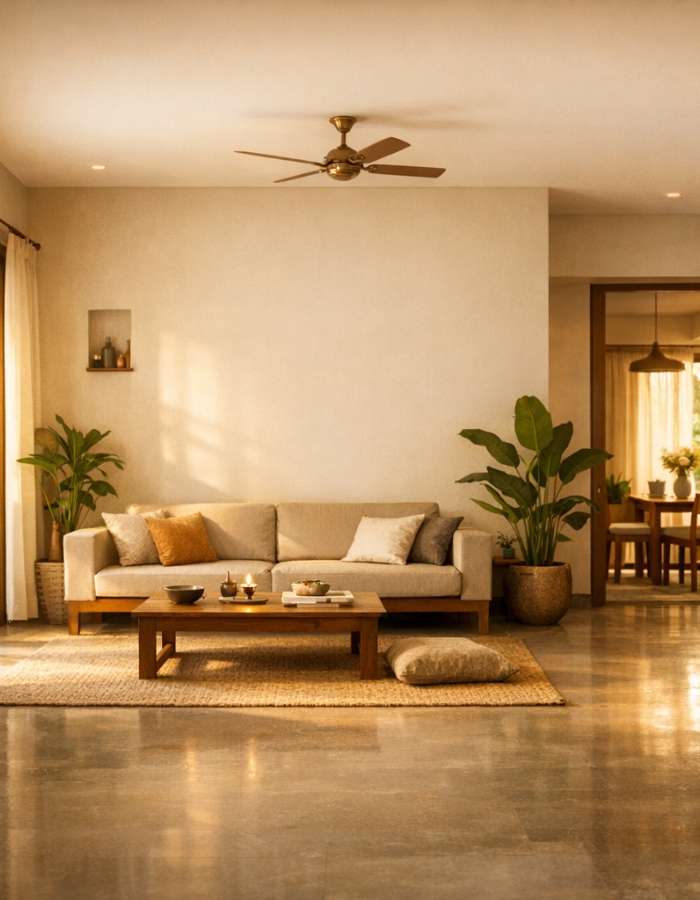
Thoughtful application of Vastu Shastra brings multiple advantages to both residential and commercial spaces.
The first benefit of Vastu design is that it creates better spatial organization which helps people understand their surroundings better. Vastu-based design creates residential and office spaces that people experience as balanced and functional.
The second principle of Vastu requires people to create spaces that follow natural patterns between sunlight and airflow and the positioning of their building. The design helps people achieve comfort because it decreases their need for artificial lighting and ventilation.
People experience better mental well-being and higher productivity when their environment presents them with attractive and peaceful surroundings. The arrangement of space determines how people will experience their emotional state and their ability to concentrate and their typical daily activities.
Modern platforms like Contec solution make it possible for people to achieve these benefits without needing to carry out major construction work or handle complex design tasks.
The Future of Vastu in the Digital Age
Digital platforms now integrate traditional practices of Vastu Shastra because technological progress has made this possible. The new system enables current users to access ancient knowledge more easily.
Digital platforms provide layout analysis together with recommendation systems which assist users in visualizing their design enhancements more effectively. The system combines traditional Vastu methods with modern technology to enable people to practice Vastu in their current daily activities.
Contec introduces contemporary solutions which make Vastu analysis and space optimization processes more efficient. The platform develops space design solutions which create comfortable environments that maintain essential equilibrium and support long-lasting health benefits.
Conclusion
Vastu Shastra is a timeless architectural science that focuses on creating harmony between people and their surroundings. By understanding basic principles such as directional alignment, natural elements, and balanced layouts, individuals can design spaces that promote positive energy and improved living conditions.
While traditional Vastu knowledge remains valuable, modern tools have made it easier to apply these principles in everyday life. Platforms like Contec app provide practical digital solutions that help homeowners, professionals, and businesses evaluate their spaces and implement effective improvements.
By combining ancient wisdom with modern technology, anyone can begin creating a more harmonious and balanced environment for living and working.